Showing posts with label storage. Show all posts

Friday, April 29, 2016

Tiny House Interior Storage


Tiny houses are, uh-what is the word I am looking for-TINY. However the same storage techniques that are used in other small living spaces can be used for your tiny house. I lived aboard a cruising sailboat for 11 years; finding storage for everything aboard a boat is a common problem and these items need to be secure, out-of-the-way and convenient for use.

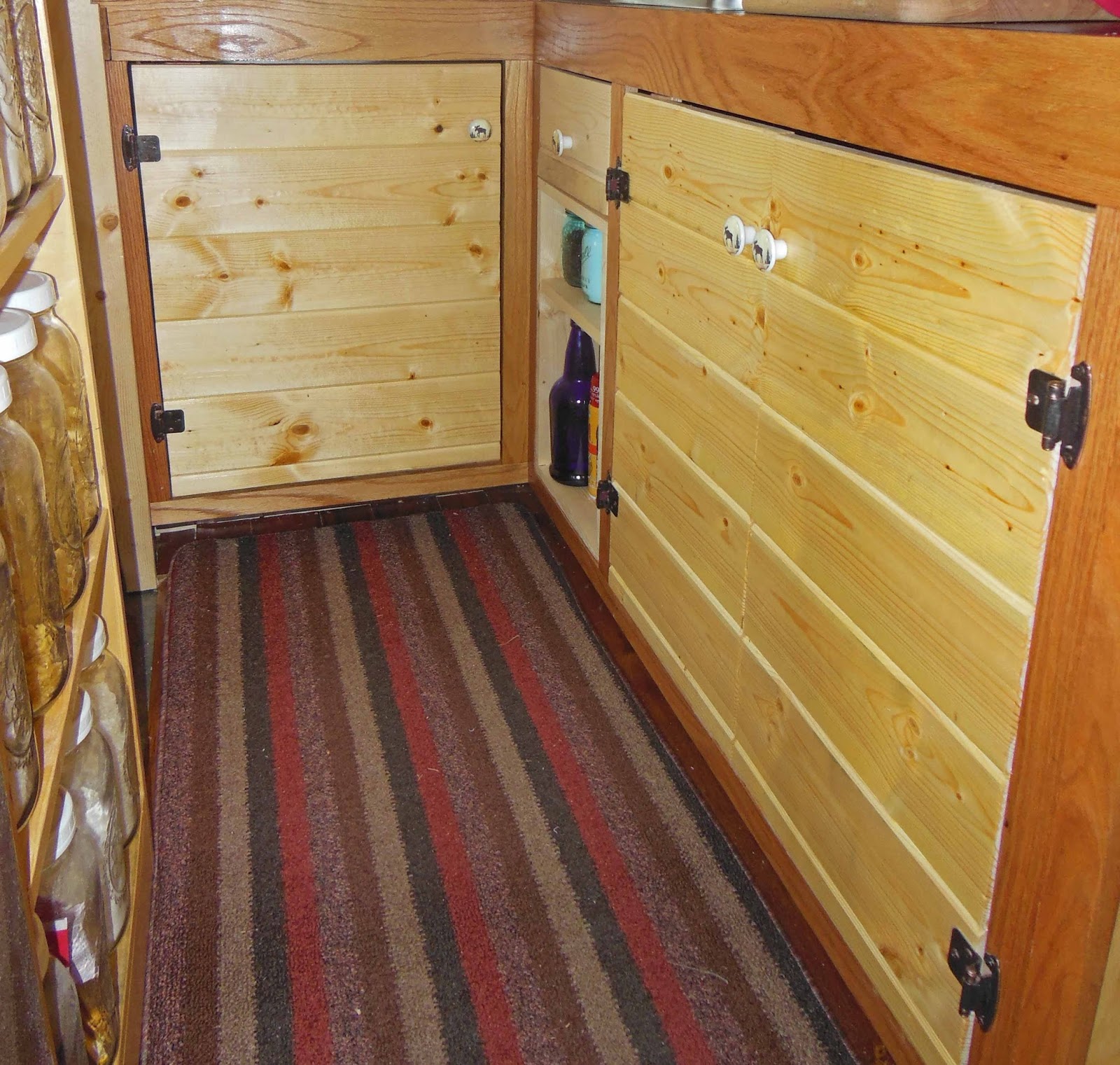
If you build you own tiny house, plan for storage. The wall that separates my kitchen from my bathroom is actually a storage cabinet. I have a section for liquor bottles in the top (I do not drink much but like having it available for visitors) and room for canning jars in the lower portion. 

I store all types of food items in my canning jars. Oatmeal, salt, sugar, hot chocolate, pasta, etc; this keeps food fresh and also protects it from bugs. It is also very convenient because when I am cooking, I just turn around, grab the jar, add the items to my recipe, then return the jar to the shelf. In a tiny house, we do not have large open counter spaces so the ability to return items to the shelf helps keep the counters open.

I use a variety of canning jars from the pint size for smaller items (pepper, brown sugar, salt, baking soda and powder, etc. I use the half-gallon size for oatmeal, pasta, sugar, hot chocolate, rice, and many other staples. This keeps it fresh and also protects it from bugs.

I have an Atwood tank water heater; in front of this heater is a dead space that I have also installed a cabinet for kitchen items (cooking oil, vinegar, etc) plus a draw above the heater for silverware and such.

I have my pots and pans hung under an overhead shelf. My pan lids are hung on the pans for convenience and space-saving. Plates, bowls and other items are on the shelf over the top.

Many items you just want out-of-view. Cabinets under the kitchen counter is a perfect place for all these items. I also have my internal water tank under the kitchen counter; it is in the corner of the "L" of the cabinets. For a more complete description of my water tank see this blog post.
There are other items you use multiple times a day, such as dish soap, toothpaste and toothbrushes, cleaning pads, etc. 


I prefer my home to look tidy so I like to have a place to put everything so it is not on the counter-top. I use boxes I constructed to store these items. 


Commercial items are available for holding foil, baggies and many other items. I have my kitchen knives on a magnetic strip and my cutting board stored on the wall adjacent to my counter-top.

Another area to use is the stairs; the area under the stairs is excellent for a closet and storage cubbies. I also constructed my own light stand and store four large house batteries in this stand. Storage is also available under sofas and such. Use all your spaces for effective storage.

The sky is the limit, design away and store  your items for convenient use.

Comments and questions welcome!


Wednesday, April 27, 2016

Solar Power: Part 2-Batteries

Without batteries, you will only be able to use solar power when the sun is shining. Honestly that is not so convenient so I would say batteries are a necessity with a solar panel system. Of all the battery choices (wet cell, maintenance free, lithium, Tesla, salt water, etc), I only have experience with wet cell and maintenance free batteries. Therefore, I will limit my discussion to these two types of batteries. These are also the most common types used for solar power.

Most of us own or have owned a car; a battery is used to start the car and power parts of the car during use. Typically this is a wet cell or maintenance free battery. These batteries work great because they are given a continuous charge during use. However, once you turn off the engine, it does not take long for these batteries to drain. Another type of battery, common in golf carts, sailboats and electric wheel chairs is deep cycle batteries. These batteries are designed to be charged and discharged repeatedly; however they are not designed to be discharged completely. It is best if deep cycle batteries are not discharged below 40-50%. Typical life of a car battery is 3-4 years. Typical life of a well cared for deep cycle battery is 7-10 years. Typical life for a poorly cared for deep cycle battery is 1-3 years; they are much to expensive not to care for properly. Batteries will be about 1/3 (or greater) of your solar budget.

When I lived aboard a sailboat, I had wet cell golf cart batteries. I used two 6 volt Trogan T105 wired together in series to make a 12V battery bank. These were strong reliable batteries but it was a pain because wet cell batteries give off small amounts of hydrogen gas in addition to the possibility of sulfuric acid spills. Wet cell batteries need to be vented and also maintained (water added). I prefer to have my batteries inside my home and I did not want to vent them to the outside as that opened up another hole in my structure. Maintenance free, for me, are a better choice.
 (Image from amazon.com)
Maintenance free batteries are available as automotive, deep cycle gel cells and deep cycle AGM (absorbed glass mat). Automotive batteries are a no-go for the reasons previously stated; gel cells (in my opinion) are temperamental but I like the AGM batteries. This is a sealed maintenance free battery, it can be mounted normally, sideways or even upside down. AGM were designed to use in military jets.

Deep cycle batteries are rated in amp hours; this is like the storage capacity of a water tank. Amp hours is the amount of energy the battery will store if fully-charged. For example, my AGM batteries are 125 amp hours each. As previously stated, you should only discharge a deep cycle battery approximately 50%; therefore an 125 amp hour battery is only really providing 62.5 amp hours of energy for use before needing to be completely recharged.

In part one of this series on solar power, I mentioned this series of blog articles would be for a basic solar setup costing in the neighborhood of $3500-5000. This size setup can easily accommodate 4-6 AGM batteries. I have experience with both the Vmax 125 amp hr and the 155 amp hr batteries. Both are excellent. When combined (wired in parallel so it remains 12V but the amp hours are additive) into a system, four 125 amp hr batteries will provide 500 amp hr (125 x 4 = 500) of storage or 250 amp hr (50% of 500) of usage before recharging.

Shown below is my battery storage, two batteries on each shelf and enclosed in a cabinet that becomes a lamp stand next to my chair. This is the advantage of AGM batteries, they do not need maintenance so can be stacked.

 I have room under the sofa for further battery storage if I decide to expand my system at a later date. This is important, always plan for expansion of your system so you are not locked into a set system.

In the next installment of this series on solar power, I will discuss the inverter. The inverter converts the battery power to AC electrical current for use in typical appliances and other needs in your home.

Below are affiliate links for the batteries discussed in this article. As always, questions are welcome.